How a technician approaches a Hoshizaki fault
A Hoshizaki assessment begins by confirming the complaint while the equipment runs normally. Depending on the machine, the technician reviews the settings, temperatures, airflow and ventilation, water supply, controls and any visible icing or leakage. Low output, irregular cubes and alarms can share causes, so the order of testing matters, and a part should never be replaced simply because it is the most expensive suspect.
Findings are then explained in plain language: a cleaning or adjustment issue, a straightforward part, or a fault that needs further testing or a component sourced. Some repairs cannot be completed safely on the day, and no labour or parts beyond the inspection should go ahead until the scope and price are agreed.
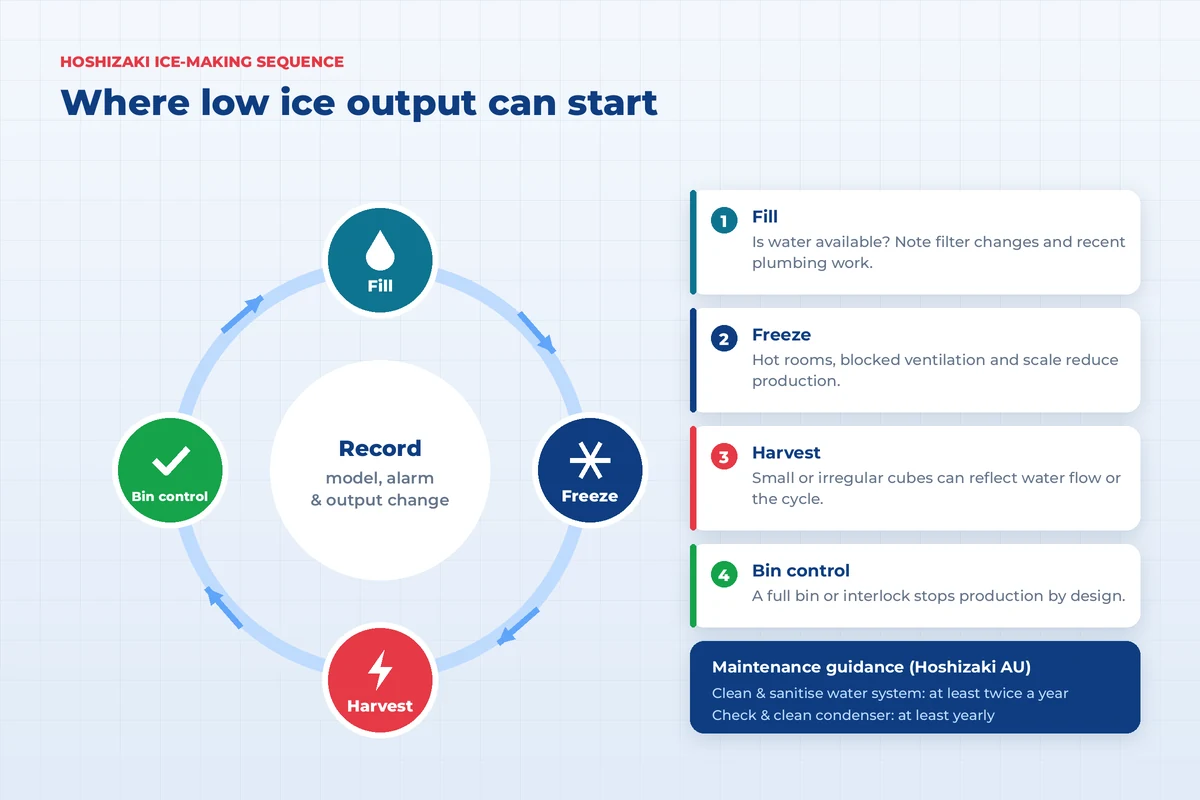
Specific to HoshizakiFor an ice machine, diagnosis may involve the sequence of fill, ice-making, harvest and bin control, alongside water supply and the machine's hygienic condition. The maintenance record can be important: scale, filters and cleaning history may influence the result. It would be misleading to diagnose a water or refrigerant fault from ice output alone.